
Peer Light • Rowan Hatagan
This is a part of our Peer Light conversation series, curated by Slow Blink for Center for Independence in 2026. Below, find the conversation between Bretty of Slow Blink and Rowan Hatagan, Digitization Project Support Specialist. at CFI.
***
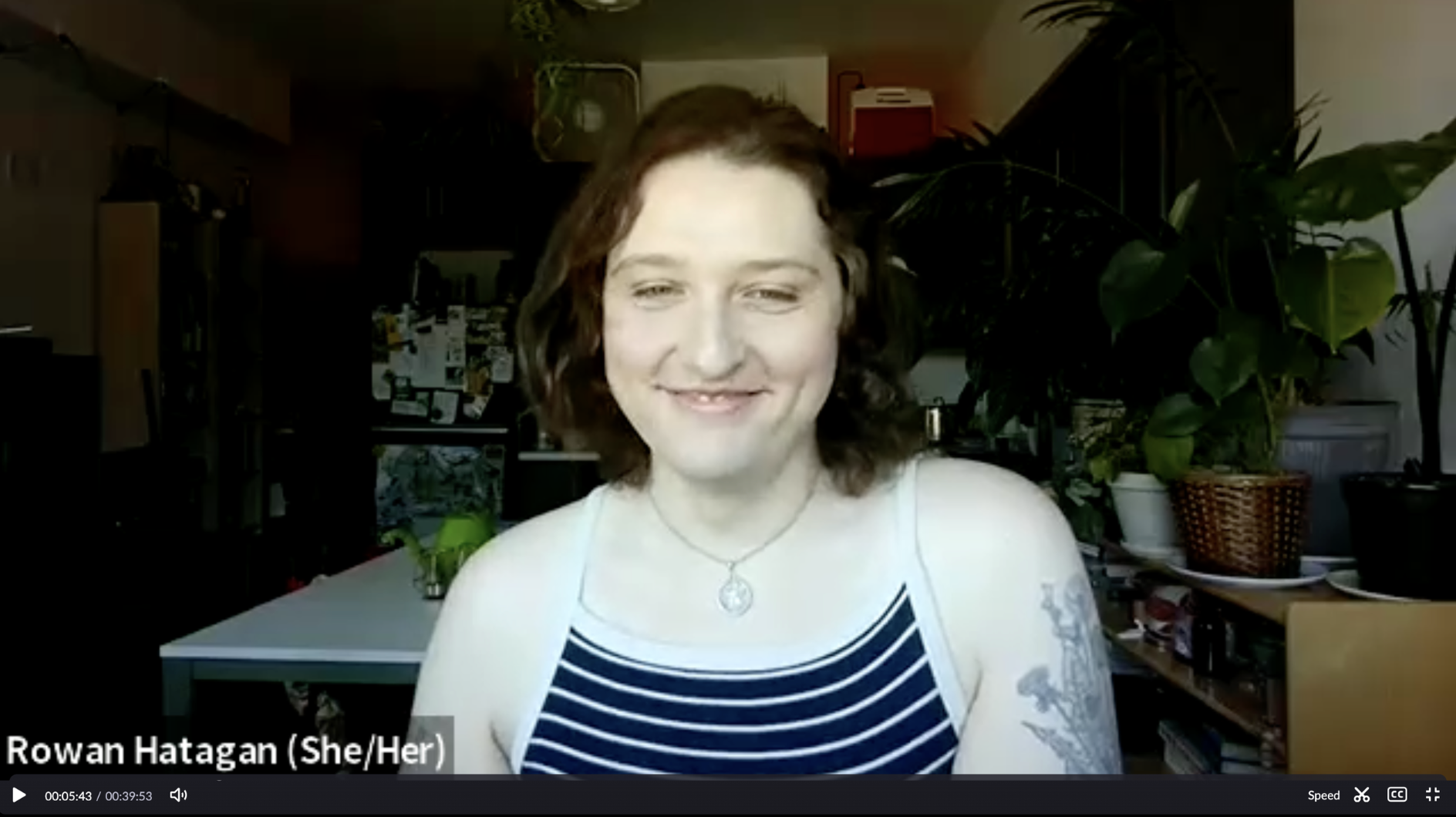
Slow Blink: Let's start with you and CFI. What does your work at CFI look like?
Rowan Hatagan: So I am in an emerging role, I guess would be the best way to put it. I just matriculated from intern to employee only a few weeks ago. I started working at CFI earlier this summer as a digitization intern, as my background is in archives and library sciences.
I was browsing for jobs and saw a posting for CFI that they needed help bringing themselves into a more digital era, transitioning from paper into more digital platforms, trying to secure a lot of their important documents. So I started earlier this summer in the Marysville location. My original job was just that they really wanted to try to capture their active case files for the Marysville office, but that was closed shortly thereafter.
My role is continuing to evolve, because there is so much nuance and so many layers to what is it that we want to capture, what needs to be captured, and how are we creating meaningful systems that are both accessible and secure. There's a lot of information that belongs to participants that we don't want to just have airing out in the wind. So my job right now—I work very closely with Faith and we are coming up with an infrastructure—I'm creating lots of metadata. I'm creating lots of hierarchical organizations. I'm doing a lot of just physical scanning of materials. And it's continuing to grow. Once we get the things that we want captured, what's next? How are we managing it? How are we encouraging others to feel comfortable, especially those that are more used to paper files?
My job is kind of bridging the gap between that and also bringing it into light.
SB: You archivists hold culture together.
Rowan: Yes. We're trying [laughs].
SB: Right, exactly. I’m curious to talk more about the “archive,” as it feels like a heartbeat of accessibility. Can you tell me more about your path to and through the archives?
Rowan: Absolutely. I came to the profession because of that. I was originally trained as a scientist. My original goal was to become a molecular biologist in plant sciences, hence all of the plants behind me. But I kind of had a lot of burnout with that. I had a lot of life changes, and I ended up moving across the country and finishing my degree in Portland.
I started taking a lot of classes that were so different from what I had been used to with the chemistry and the math and the hard stuff. I started getting into the stuff that I'd always been interested in, but didn't have the chance to participate in. More of the social sciences, the anthropology, the queer and gender studies. I took a really life-changing class in my summer capstone right before I graduated, which was a trans oral history project.
The material that I was exposed to in that class was so illuminating. It was my light bulb moment for what I feel really pulled to, because there's such a wide array of culture and people who are so underrepresented and so unprotected in terms of how their history is saved. How is it kept alive? I felt this real pull at my heart like, wow, I could do this. I can make a difference with this.
It's a big part of what resonates for me through CFI—the “nothing about us without us” mantra—because a big part of that class is, “Who is protecting this history?” It's the people of the communities. It's the people who belong to these marginalized groups. It's these people who have a stake in whether or not their history and story is collected.
The archice is such an important part of protecting culture, protecting stories, protecting voices. And it's more than just a musty old library. It's out here in the streets. It's a lot of grassroots operations. It's nonprofits like CFI even.
SB: That's such an interesting aspect of independent living: the archive.
Rowan: Yes. There's so many grassroots archives that have splintered from bigger institutions because they were not being represented and because, infrastructurally, they are not considering the people that they're representing. They're speaking of, but not speaking for. I think a lot of people rightfully feel uncomfortable with that because people are not just subjects of study. They're living, breathing things, and they deserve to be a part of what is happening with their history.
How is it being represented? What kind of language is being used? And a lot of those bigger institutions do not always necessarily operate from a place of care when it comes to that. It's just data. It's just information.
SB: Totally. The data you keep is linked to the stories you do and don’t want to tell. I can tell we could go on, but let me try to stick to the script here. Here is a question that came from the CFI collective: How do you personally learn best?
Rowan: I learn best through action, I believe. And I learned best through participation, enmeshment, being a part of something. My life history has been a series of me throwing myself at different things and seeing what the outcome is. It has had mixed results, but it is how I learn the best, because there's a kind of ideal that people know what they're going to do and they set out to do it.
I've had a very opposite experience where, because of this mode of learning, I know a lot of what I don't want to do. I know a lot of what I don't like. I know a lot of what does not fill my cup or make me feel safe or respected. So it's a blessing and a curse, as they say, as the old platitude goes. But yeah, I'm very much a person who needs the experience of learning more than just the theoretical aspect. I need to be a part of it.
I need to pick things up and shake hands and embrace things and be with them, not just learn about them. They're both important aspects, but for me, I think it creates those neural pathways that strengthens them when I'm like, yes, I can see this, I can feel this, I can participate with this and be a part of it.
SB: Absolutely. The archive isn't a far-gone past. It is living, breathing. You have to understand what's going on to understand what went on.
Rowan: Absolutely. It's really a stewardship. It's really important to consider who will interact with this material and how it might influence them. And the same goes for what I'm doing at CFI. It's like who will be needing this material? What layers of accessibility must we consider to make sure that it's accessible to the utmost? Yeah, you have to really be able to understand that it exists beyond just how you interact with it.
SB: Language has come up in every conversation that I've had. So I'm curious to ask you: Is part of your work at CFI giving people a language for things?
Rowan: Absolutely, because I think that there's so much of our lives that happens to us and that we don't always understand. And it's because we hear stories, it's because we interact with information. It's because we're exposed to this language that we're able to grow, that we're able to understand not just ourselves, but others.
This collective forging of language, it's important not just for me, but it's for the people who exist all around me. It's for community members, it's for everybody, because there is only darkness without the kind of illumination that comes from information. We don't need to look too far in this country to see how a lack of information or misinformation, disinformation can so negatively impact people.
And by comparison, when people have that kind of access, they have that language, they have truth, it makes a huge difference because they're able to start with themselves and expand their own knowledge, expand their own experience. It's like I said, the lightbulb kind of goes off, and I think it's important for us to try to have that for as many as we can.
SB: Totally. Here's another question for you. What brings you joy, be it inside or outside of CFI?
Rowan: So I have a really hard time separating the two, because I'm so passionate about my work. I'm also at this kind of intersection in my life where I'm building my career from a place that's really unique to me. For a long time, my career was very linear in a way, and it was not necessarily from a place of what am I doing that makes me happy? What am I doing that makes me feel like I'm restoring some part of myself? Because it was working for either academia or for corporations where you don't really matter. I hate to say it that way, but you don't to them, because you're a body performing work and they're not afraid to remind you of that at times.
I think what I'm doing now to fill my cup and feel joy is very tied to my work. It's learning more about the communities that exist here in Washington, especially in the Seattle-Tacoma area. It's figuring out how I can be a part of it.
I volunteer every once in a while at the Shoreline Historic Museum that's just right up the street from my house. And that's one thing that brings me joy, because it fills that niche of, okay, I'm doing professional development, but I'm also helping a small museum that has a staff of one. They have their manager, who is excellent—he does a wonderful job there—but he has a lot of hats to wear, and they have a huge archive of materials that has just been untouched for years because they don't have anybody else to work there. So that brings me a lot of joy, just going there and spending a few hours cataloging and scanning things and helping them keep their doors open.
And then of course, it's so beautiful here. It's hard not to just wander out into nature somewhere. I want to be a barefoot-in-the-woods kind of person when I feel like I need to recharge. And I do a lot of that kind of forest bathing, just being immersed in nature. It really restores a lot of that energy that's expended, just doing a lot of labor and work as we're so accustomed to.
SB: Big yes to forest baths. Here's another question: What's a small change that made a big difference to you? Or a change that made a big difference to you?
Rowan: My work at CFI is allowing me to consider myself as a part of community, because I have a lot of what is often called “invisible disabilities.”
I've come from a family and I've been brought up in a culture where you don't discuss those things, you don't talk about those things, you keep them to yourself, you hide them. And I think because of that, I had to unlearn a lot of that mentality within myself. I mean, we're constantly doing that with so much, but this is one layer of the onion, according to Shrek, the great scholar. It's an unlearning.
Being able to participate with CFI and feel safe and feel comfortable has allowed me to embrace myself and consider myself as a part of community, which serves so much. It helps me so much to feel like, wow, I'm at peace with this part of myself. It doesn't need to be something that is so antagonistic, but also it allows me to connect that thread to my work, to the people around me, to feel like a vested interest in helping others and helping myself at the same time.
SB: Shrek is the mentor or mentors. As an academic of the archive, I’m curious, who or what has inspired or influenced you? It could be literature, a film, comedy, anything.
Rowan: There's so many. I think that bibliography must be huge at this point, but I think that there are a few who really kind of got me together. They've really gathered me in such a deep and profound way.
One person is Susan Stryker, who is an amazing historian and professor. She also has been just such a profound curator of queer and trans knowledge as the keeper of archives in San Francisco. She's a documentarian and an author. She is somebody who I really, really admire because she has done so much to inspire people why we should care about queer and trans people. Why should we protect this history? Why should we try to understand each other, not just for those of us who belong to those communities, but for others? This is why we matter. This is why we're here.
And so I also think of queer, feminist philosophers and writers like Audre Lord, in particular. I think the theory of intersectionality is something that changed my life because it operates on such a huge level that it really helps you zoom out on the world and realize I'm just a part of this big thing. There are so many people whose lives are so similar, but so different. Their experiences are so different.
I think the two of them, collectively, are ones that I often come back to, because I think that they have not just inspired me, but what I want to do with my life. And also, how am I viewing this life? How am I interacting with people? How am I considering others other than myself? Holding that space and holding that consideration and gratitude for our differences.
I could go on and on. There is what's called a feminist ethics of care, which is something that's so important, because as I mentioned earlier, we always need to consider that the archives are not just stagnant. They're not just things. There are people who could pick up these materials and be deeply moved. They could be deeply wounded. They could be traumatized. And those are things that are just now starting to be considered. How are we doing this? How are we making sure that these sources are vetted, that we're allowing people to understand, "Hey, we want you to be okay. We want this information to be here for you, but we don't want to deepen your pain or traumatize you." And it's especially important for people of color, indigenous communities.
It's important for anybody who's experienced any kind of trauma or conflict or just the kind of yolk of oppression in this country. So yeah, that's kind of my sphere of inspiration. It's very much a profound appreciation and want for ingraining myself in my community, but also how I am operating in it. What am I doing to help and protect and consider others?
SB: Totally, the archive is such an important relationship, teacher, and reflection. Going back to something you mentioned earlier re: invisible disabilities, here’s a question for you: If you could clear up one misconception that people have about disabilities, what would it be?
Rowan: It would be that we are capable of so much. A disability is not a limitation in terms of value. And I've experienced that firsthand, as one of the reasons I got out of the hard sciences is at the time when I was really struggling and coming to terms with the fact that I have these invisible disabilities that I've had to keep secret, I've had to repress, and they're so negatively influencing me.
I reached out to one of my mentors at the time and to say, "Hey, I might need a little bit of help or consideration with this." I was treated so vastly different and I was treated as though I was not capable, and it really hurt because that wasn't the prompt. That wasn't what I was providing to them. I was saying, "Hey, I'm just learning about myself and realizing that there are certain things that may influence my life that I might need to manage and be more considerate of so that I can continue to work." So I think that understanding that invisible disabilities especially, but not just them, it's not a limitation on our ability to do things that everyone else does and is expected to do.
It's just there may be a different path to that end result, to that product, to that labor. I think of that so often because, I mean, jokes on you, I still have a lovely career. But I don't know, it's not okay. I think that people need to understand that people are complex and our disabilities are complex, but that doesn't mean that we are unable.
SB: So true. Also, great response: “That wasn't the prompt.” Here is a three-headed question: What's a question you wish people would stop asking you? What's a question you wish people would ask themselves? And what's a question you'd like to ask somebody?
Rowan: I hate when people ask, "So what's your disability?" Because I think, for me—especially compartmentalizing a lot of my own acceptance of self and being very hesitant to embrace that I have disability as a part of who I am—there's this kind of idea that you need to glorify all of that. That you need to explain all of that. That you need to bring other people to a level of understanding or consideration for why that's true. And I just find that abhorrent. It's so inappropriate. It's so harmful because unless somebody feels comfortable to divulge that information to you, that isn't any of your business.
And I think, hand-in-hand with that, a question I wish more people would ask, especially if you have somebody in your life who says—or if you have an employee or just meet a stranger on the street who says—"I have a disability," I think the next question should be more geared towards, “What can I do to a accommodate you?” And, “What can I do to help allow you to feel empowered, independent, and safe?” I think that's a much better question than just probing into somebody's personal business, and it also helps so much more. It's a place of care rather than a place of invasiveness. I think of those three, those two really go hand-in-hand, but I think that the third one is of equal importance because it's a question that I ask myself a lot.
It's a question that I'm asking myself daily: What am I doing for myself to accommodate, to hold space for, to give myself the care that I need? I think it's very easy to reach a point of frustration and degradation when you have a disability and when it provides challenges to your life, especially if you're working, especially if you have responsibilities.
A question that I have for myself is, “What are you doing to care for yourself?” What are you doing to soften and understand that, hey, this isn't wrong, this isn't a bad thing, this is just a thing, it's a part of you. What are you doing to nurture that and care for that rather than antagonize yourself and be like, what's wrong with you? I mean, that's a common phrase that I think we've all heard and have been exposed to, and it's something that I inflicted on myself. I'm just kind of getting rid of that question and replacing it with, “Well, what am I doing to help?” “What am I doing to care?” “What am I doing to regulate?”
Rather than what's wrong with you, because that no longer serves me. I don't think it ever did. I think that that's something that it's made its way out the door, but I'm trying very hard to emphasize that question with myself is: What are you doing to protect you? What are you doing to help you? What are you doing to advocate for you? So it's maybe more than one question, but I think it all stems from the kind of root of a place of care, of acknowledgement, and a place of self-respect, I think.
SB: Ooph, such good questions to be asking (and not asking). I have one final question for you, which is, how do you define independent living?
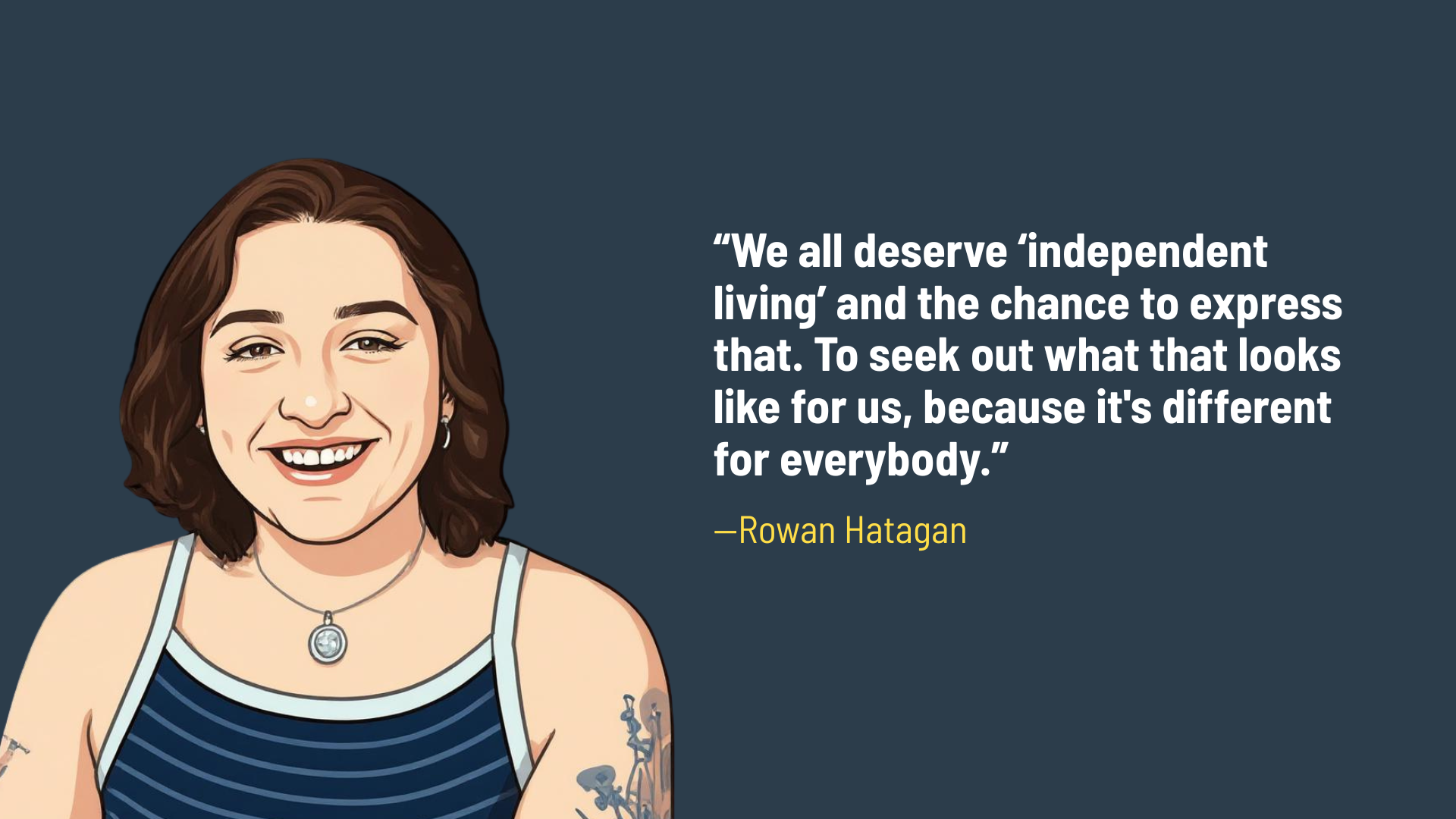
Rowan: That's a great question because that's such a complex, compound question. At the heart of it though, I think that “independent living” is an acknowledgement of our collective autonomy and a respect for that autonomy. But it's not just that; it's more than that.
I think it's really about just acknowledging that we are all entitled to autonomy as sentient things on this weird globe hurtling through space and time with all of this consciousness and all of these feelings. We all deserve that and we all deserve the chance to express that and seek out what that looks like for us because it's different for everybody.
SB: Thank you for that kernel. And also for this nourishing conversation. I appreciate you jumping in, and your willingness to be a part of Peer Light. I always walk away from these conversations feeling in that shared space of collective care. So thank you for this wide-ranging conversation. It's the best way to start mornings.
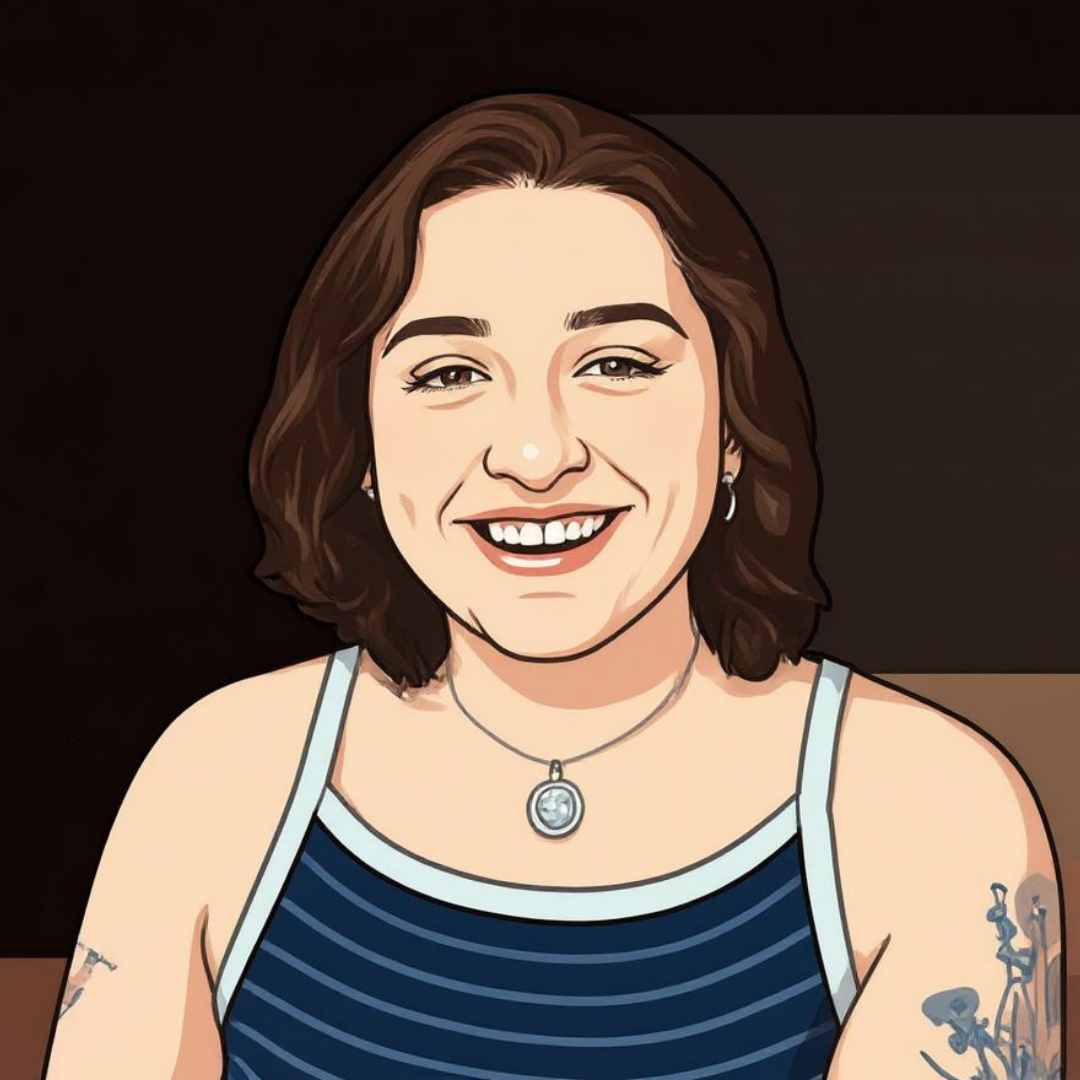
Rowan Hatagan
Digitization Project Support Specialist at CFI.