
Peer Light • Matt Herzog
This is a part of our Peer Light conversation series, curated by Slow Blink for Center for Independence in 2026. Below, find the conversation between Bretty of Slow Blink and Matt Herzog, Senior Manager of Programs and Operations at CFI. See Matt’s bio at the bottom of the page.
***
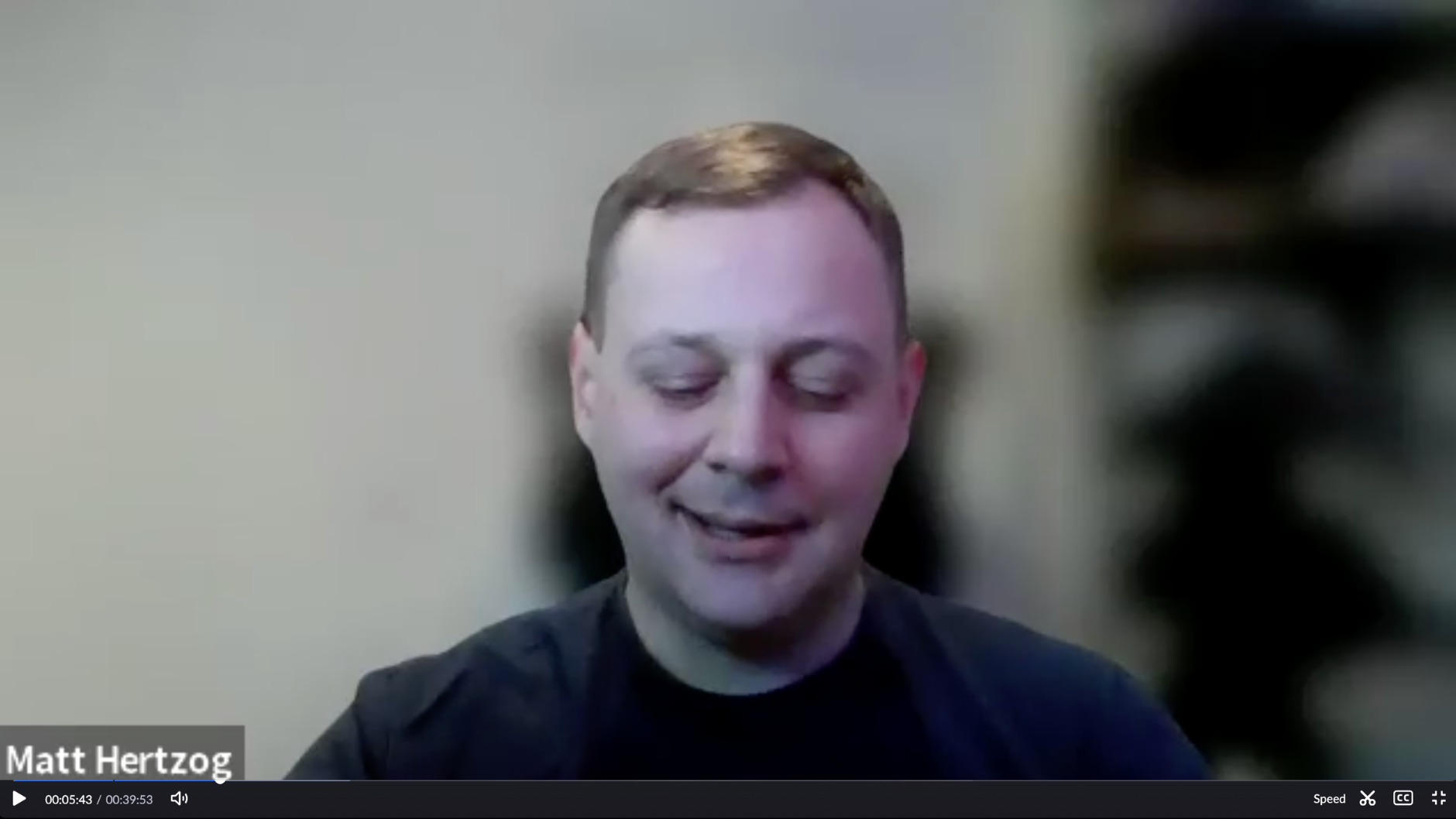
Slow Blink: Can you tell me a bit about your role at CFI and what do you do?
Matt: I started a new role about four months ago as the Senior Manager of Programs and Operations for the Center for Independence, which means I oversee both programs and the operations. It has a lot to do with overarching problem solving, puzzling, managing staff members, managing our programs and contracts, and a lot of compliance work, but also just being there as a support for staff members. I've kind of come up through CFI and done a whole lot of things and learned a whole lot, so it's been a real blessing to be able to pass that along to others.
SB: How did you make your way to CFI? What was your path getting to CFI and where you are now?
Matt: It’s pretty interesting, actually. When I was in the School of Social Work at UW, I came here as part of my practicum. It was kind of a last minute thing because what I had originally been connected to didn't pan out. I started looking for things that called me, and I found the Center for Independence, this place that worked with not only people with disabilities, but I knew they had a veteran-related program. As a veteran myself, I was really into that.
I came here as an intern and just absolutely loved it. I felt like it was a place where we were all part of a team, and if I didn't have the experience or skills or capacity to do something for someone we were serving, I probably did have the skills and wherewithal to take something off of another staff member's plate so that they could go do that, even when I was just an intern.
Once I graduated from UW, I accepted a position as a Program Manager here back in September of last year, and then accepted the Senior Manager role in November of this year or this last year.
SB: It sounds like a bit of serendipity and alignment. In your previous roles, did you work in disability-focused or disability justice organizations, or was that new when you came to CFI?
Matt: If I go back even further, it gets even more interesting. I actually went into the Marines in my early 20s, knowing that when I got out, I wanted to use my GI Bill and get a degree and go into law enforcement. And I did all that. I did law enforcement for about two and a half years. But in December of 2020, I decided that was not my path anymore.
One of the things my partner pointed out to me was that all the days I had come home from that job and was really excited to share my experiences—things I had learned, people I'd interacted with—was whenever I took the time to talk to someone who was experiencing homelessness or who just had this different upbringing than me, culture than me. Lots of times, it was people I didn't understand.
So I asked and just listened, and I learned a whole lot. I was like, "Wow, this needs to change." So once I was done with law enforcement, I took a little time to figure out if moving into social work or something in this field would really work for me, and volunteered at a crisis text line to figure that out. I had some really good days, and I had some really bad days, but it confirmed for me that even after the really bad days, it was all worth it and that I really loved what I was doing.
SB: That is really interesting. The way our paths cross, split, and unify. Going even further back, where did you grow up?
Matt: I grew up in the North Seattle area, literally a five-minute car ride from the Northgate Mall or what used to be Northgate Mall now. Born and raised there for a very long time before going elsewhere for training and whatnot in the Marines.
SB: When did you enlist in the Marines?
Matt: I was 22. I was a little bit late. I was the old guy. As you know, a lot of people are coming right out of high school or maybe had a gap year or something. I went in the Marines for five years, because I worked on helicopters and the training was just so long that they required an extra year. It was quite an experience. I don't know if I would do it again, knowing everything I know now about myself, but I certainly proved that I could.
SB: That’s fascinating, because one of the Peer Light questions the staff came up with was, "If you knew now what you know, would you do anything different?"
Matt: I think it's really easy to fall into the thinking of “grass is always greener.” Because you don't know what you don't know. It could have been different. It could have been better. But it might've not been. What I've learned about myself since then is that I was born with and have a disability, and I just didn't have a fricking clue until I finally got a diagnosis at age 32. After a lot of introspection, I was able to look back at a lot of the pretty terrible experiences I've been through, and realized that yes, it wasn't my fault. And a decent amount of those people also probably weren't trying to be bad people, even though the impact was pretty terrible. But they were looking at me from their own perspective of what neurotypical is. I had no idea that I wasn't neurotypical. So with that point of view, with that fresh set of glasses per se, it’s hard to tell which path I would choose if I learned that a lot earlier.
SB: You don’t know what you don’t know. So true. And not having a name for things, that can lead to a lot of self-questioning and self-doubt. I resonate with getting late diagnoses.
Matt: Exactly. I was born in 1988, so it wasn't necessarily a timeframe that people were being diagnosed left and right because it wasn't being looked for as actively. And also, in my parents' generation, it sure wasn't, especially for my mom. But now, I can look back at it and realize that, “Oh, my mom was going to my parent-teacher conferences and hearing these things and being like, ‘Well, that's ridiculous. I'm the same way as he is.’” It's like, "Yep, you sure are, mom.” She still probably doesn’t fully understand what that means, but yeah, it's like no wonder it didn't register.
SB: I feel that. So for you, what was the change that caused you to seek out the diagnosis? Was it resources around you? Obviously, share only how much you’d like to.
Matt: So I've been diagnosed with ADHD hyperactive. And for me, eventually, I needed to actually get the diagnosis because I did need access to medication to help balance things out and get back to a normal life. I have memories as far back as five or six years old where I can point to things and doctors are like, "Hey, yeah, that's ADHD, clear signs." But I don't recall feeling like my ADHD was getting in the way of so many of my normal life activities and stuff until maybe my late 20s to about 30 or so. And I think that happened because of a lot of stress, anxiety, and traumatic experiences that were going on at the time, and things just really kicked it up a notch.
As a part of me just working on myself—and working through things in therapy—after I stopped working in law enforcement, it was just part of learning new things about myself. Like, "Hey, why is this happening? Or, “Why do I think about things this way?” “Why do I seem to be more really sensitive in this area?” “Why do these things not seem to cause me the same emotions that it seems to elicit in others?"
You start to learn that yes, I do have these little things that are different from others, and this is why. Once you can name that, it’s like, "Oh, well crap, that makes sense now.” But also I've lived 30 plus years of my life and didn't have a clue. So it's really hard to reprocess all those experiences.
SB: Yeah, that elapse of time can come crashing down, in good and challenging ways. You mentioned how “listening to people” was a common thread in your work. I'm curious, what does it take to work in the field you’re in now with CFI?
Matt: I think being a good and active listener, of course, goes a long way, but also empathy. Center for Independence has a minimum requirement for both board and staff members to have at least 51% or more people with disabilities. And the reason that's so important is because we all come with these lived experiences. It’s important to be able to have perspective. One quote I share pretty often—it's always attributed to Walt Whitman, but I think it was actually someone else—is, “Be curious, not judgmental.”
A lot of people that have had really terrible experiences in their lives reflect that: they've been treated very poorly, and they also tend to treat others poorly, whether they recognize that or not. Being able to show up somewhere and, instead of being judgmental, just knowing, "I don't want to be around this or that person," you have to have healthy boundaries.
Part of this is recognizing that how someone else is treating you is not always about you. As long as someone’s not breaking or crossing my boundaries, and I feel safe and comfortable, I'm always really happy to be there, and empathize with and support them. People who are projecting that pain have probably experienced it for years. And they often project it out towards all the people around them, who are often underpaid caregivers or social workers and things like that.
SB: “It’s not always about you.” So true.
Matt: There's so much stuff that doesn't make sense to me, but even when it doesn't make sense to me, it makes sense to the other person, and there is a reason for it.
SB: It sounds like “listening” is not just a key part of this work, but what truly unifies us across experiences. I’d be curious to know more about what “listening” means to you.
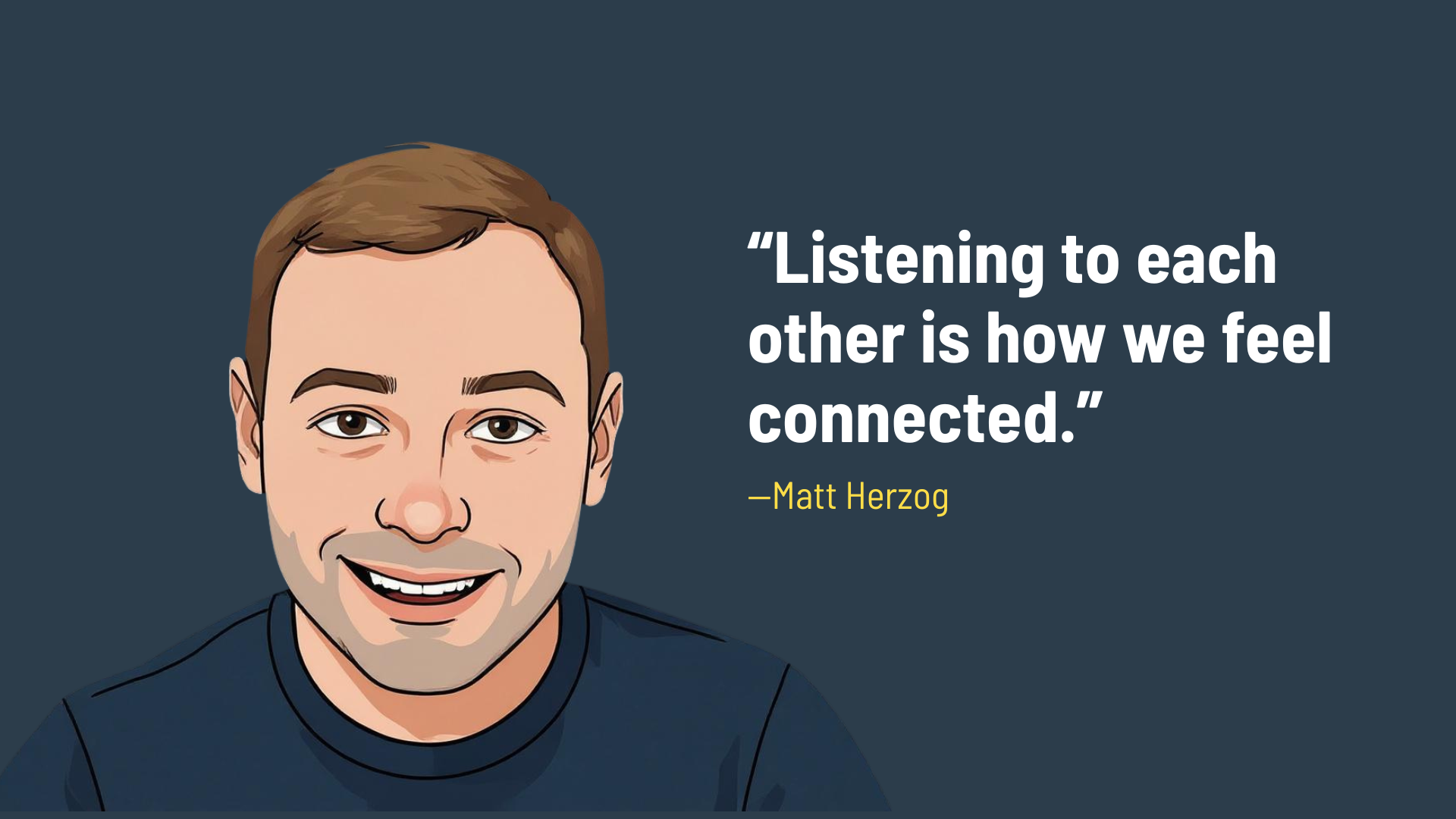
Matt: Listening is how we feel connected. You've probably heard that there is an “epidemic of loneliness” occurring and that a lot of us are suffering from. And it does tend to be the people that have been in the fringes of society for one reason or another. But like I said earlier, it's probably people who have had a ton of terrible experiences, where they have not felt connected or cared about. To be able to connect with someone—and just have a conversation and actually hear them out or be heard—is transformational.
And sometimes, if the conversation goes a way that is pushing on my boundaries, I can help guide it in a different direction, without pushing back and telling them that hurt me or frustrated me. I've had pretty amazing conversations, where some thoughts and feelings that far from my own have come up. Instead of engaging with them, I’m able to just move the topic onto something else so that we can continue to have a wonderful conversation. It seems to always work in those situations.
When someone's looking for that connection, I think they accept it when something's not engaged with, because they'll connect with the next thing and move on. But yeah, I also think conversation and being heard and feeling that connection has a lot to do with how we build community and community is so, so important. It's really hard to get anything done alone. It's really hard to get anything done as an organization alone. But as a group, we are way more effective.
SB: Which brings me to my next question. How would you define independent living? What does that mean to you or to CFI?
Matt: CFI is here to empower people with disabilities to live their lives more independently in any way that they're looking for whatever sort of goals they have. I also like to bring up or focus on the concept of what is “dependence” and what is “independence.”
A lot of people think that people who are reliant on DART—dial-ride, transit for transportation, which a lot of people with disabilities are reliant on—are dependent on it. But people don't consider it a “dependence” to need to use regular metro transportation, which is something we're also all reliant on.
Think about your trash or garbage collection company coming and picking up your garbage bins. It's something that's built into society, but people would consider someone to be “dependent” on a caregiver that has to empty and take out the trash for someone who isn't able to do that, perhaps for mobility reasons. A lot of places aren't built ADA compliant or with any disabilities in mind, so I like to question the idea of what we even think being “dependent” versus “independent” actually is.
To go back to living independently, we are looking to empower people. To help them develop the skills that let them remain in community. A lot of time, we do a lot of independent living skills development. Because people are taught tools, but sometimes the way it’s taught wasn’t in a way that made sense for them. So we try to find out what does work for each person. And once they figure out how to do something for themselves, they are no longer reliant on that service and, perhaps, now don't have to pay $100 a month for that service. They’re now are able to spend that money on transportation, for example. And now that they have transportation, they can do other things. So on and so forth.
It just opens up a lot of doors when someone can actually stop and take the time to help you learn how you learn, and help you find the resources, tools, and develop the skills to get your life, your independence, and stay in the community. Enjoy life the way that everyone deserves to be able to enjoy it.
SB: I appreciate you bringing that up. I was going to ask you another question, which you kind of just answered here, but still want to give you the chance to answer it directly: What’s one misconception you feel people have about those who live with disabilities?
Matt: A lot of people think that there's those of us who are disabled and then there's those of us who aren't. But really, there's those of us who are disabled right now, and then there's those of us who will be disabled later. At some point, odds are highly likely you will have some form of disability, something that reduces your ability to maintain an important life activity for you, whether it's in your "retirement years" or sooner. I think that's a pretty big thing that a lot of people don't think about. Yes, it doesn't affect you right now, but it affects everyone.
SB: So true. A few final questions: What is bringing you joy outside of work these days?
Matt: Similar to what brings me joy at work, it’s community, connecting with friends, and chosen family. My partner and I just went up this weekend to friends of ours in Arlington, who just had their first baby not long ago. We're trying to get up there once a month and just help deep clean the house for a few hours, bring some dinner by, and just eat and hang out for a little bit. Help them get a household reset. That's one way we're building community right now: showing up for people when you can, in the important ways.
SB: What's a question you wish people would stop asking you?
Matt: Some version of me being vulnerable and sharing my experience, my disability, or my diagnoses, and having someone say, "Oh, you really think you're like that?" It’s like, “I hear that this did not register for you and that you thought I was super neurotypical, and that this surprised you, but yes, I'm pretty darn sure that I am like that.”
It's not just that I have an invisible disability. It's that I'm neurotypical-passing. Probably also because I'm a white man in his 30s. If I wasn't a white man in my mid- 30s, people probably would've questioned far more things that probably would've led to an earlier ADHD diagnosis.
SB: Flipping my previous question, what's a question you wish people would ask themselves more often?
Matt: Probably something along the lines of, when you are interacting with someone with a disability and we're having a conversation, perhaps ask yourself beforehand, “Am I being helpful and supportive or am I talking down to or infantilizing someone in some way?”
You can ask someone if you can be of assistance, as opposed to just doing something for someone and thinking you are being helpful. When you act without, well, consent essentially, you rob the other person of their autonomy. It can feel helpful for you or it can feel like you are being helpful, but for the person you're trying to help, it can feel like you just don't think they can do something or think that they need something from you.
SB: Love it. Final question: Are there any other mantras or phrases that have been important to you?
Matt: I'm not a huge sports fan, but this is a team sport, and we all have our own unique set of skills and experiences and perspectives, and we all need to come together in order to do something great.
I always use the example of when I started as an intern, and the person who was supervising me needed to both prepare for a participant they were working with that was coming in for a meeting, and also needed to clean up the back room before an event later on. It's like, "Well, I have the skills and capacity to do one of those." So I took the cleaning-up of the back room off their plate and that opened up a bunch of free time for them to prep for a meeting.
And I felt like I helped the person that they were helping, even though I didn't have the same skills and experiences. So yeah, think of it like that: No matter what you're given, no matter what efforts you're putting in, it's all important. We're all part of one team.
SB: No better note to end on. Thank you, Matt, for giving us some insight into your experiences and also your perspective. You brought up a lot of really important things that we could all be thinking about, and things we could do on the daily to help ourselves and those around us. So I appreciate you sharing in.

Matt Herzog
Matt is the Senior Manager of Programs and Operations in the Marysville office. He is a Marine veteran who discovered his true calling in social work through moments of connection and advocacy while serving others in crisis. His work is rooted in the belief that every person deserves access to the tools and support necessary to live independently and with dignity.
Passionate about housing stability, public benefit navigation, and neurodiversity-informed support, Matt advocates for inclusive systems that honor self-determination and equity. He is especially committed to uplifting veterans, people with disabilities, and underserved communities through person-centered, trauma-informed practice.