
Peer Light • Toni Bremon Ansen
This is a part of our Peer Light conversation series, curated by Slow Blink for Center for Independence in 2026. Below, find the conversation between Bretty of Slow Blink and Toni Bremon Ansen, Information & Referral Specialist at CFI. See Toni’s bio at the bottom of the page.
***
Slow Blink: Tell me a little bit about what you do for CFI and at CFI.
Toni Bremon Ansen: I'm the Information and Referral Specialist, so I'm basically a receptionist on steroids. I try to field as many calls as I can. Sometimes, people call for something that really doesn't need a coordinator. If I can answer as much as I can, and help them as much before I pass them on, I try to do that. There's a lot more service stuff people look for, but I pretty much do that just in my spare time anyway. I lead such a boring life.
SB: A boring life, you say, and yet, you're the receptionist on steroids! What a good title. So you’re people’s first point of contact then, right?
Toni: Yeah.
SB: So what type of outreach do you often get?
Toni: I would say the first is housing. The second thing that people want is some sort of medical equipment, whether obtaining it for themselves or to pass them on to someone else. The third, a lot of lonely people just want someone to talk to. I get a lot of those. That's usually the top three.
SB: Right, this has come up in a few of these conversations. The independence, but also the balance of socializing that you need or want.
Toni: Yeah, and also to be social without feeling like a burden to other people.
SB: Talk to me about that because that feels like it's a big one.
Toni: I've noticed that a lot of people with any type of a disability, there's some people that try to do too much. It’s like, okay, yeah, I know I'm in a wheelchair, but I don't need you to push me up every hill. There's some things that I can do for myself. So a lot of the pressure is from people with no disabilities who tend to let their ableism just take over.
And human nature kicks in: I don't want to feel like I either can't do something for myself or now this person feels like they're put out because they have to work extra hard even though I could do it myself. That causes some people to withdraw a little. Like, if I'm just going to be a burden or perceived as a burden, then why socialize? And then isolation becomes a thing. And I mean, we're humans, we need some sort of outside contact. And sometimes society pushes people into, well, now I have to be a hermit. Yeah, I see that a lot.
SB: Right, a kind of isolation vs. insulation scenario. So what brought you personally to CFI, working at CFI? What was your path there?
Toni: I tend to do a lot of resource gathering. Back in 2021 and 2022, Rainbow Center had community hours I used to go to, so I'd just spend time on the computers, just gathering resources that people might need. And I just always kept that habit up.
So I'd run into Faith—and I was working at the Hilltop Action Coalition, but then the board put everyone on furlough and just didn't bring anyone back—and I was in the middle of jobs, and she's like, "I have something that's very much in your wheelhouse." And things happen, not when you want them, but when they're supposed to happen.
I was like, God, I wouldn't say I was desperate, but I was definitely looking for another source of income that fit into how I naturally do things and how I think. And then the two points finally converged, and I've been here ever since.
SB: Talk about serendipity. But also the reality of needing something new and needing something now.
Toni: Sometimes, it's kind of like trying to walk across stepping stones across a pond, but there's this heavy thick fog. So it's like you're trying to find these slippery stones and you can't see exactly where they are.
SB: Wow, yes. We’re going to need you to give us more images, Toni. The fog is real. Where’s the next step?
Toni: Yeah, sometimes it's behind. I mean, sometimes you have to take a step back to be able to progress.
SB: Another truth. Here’s another question for you: Are you working on any projects at the moment?
Toni: Actually, right now I'm also compiling a more comprehensive resource guide. It'll also make my job easier, something we could post on the website just to make the information more easy access.
SB: What types of resources are you looking for?
Toni: I'm actually copying another resource guide from the Lewis Mason-Thurston Area Agency on Aging. I was just going through some of their categories and stuff, and there's a lot of things in here that I haven't thought of, but there's also other things that I've come up with that they haven't put in theirs. Everything from behavioral health to immigrant and refugee services, things like local food bank info and home repairs.
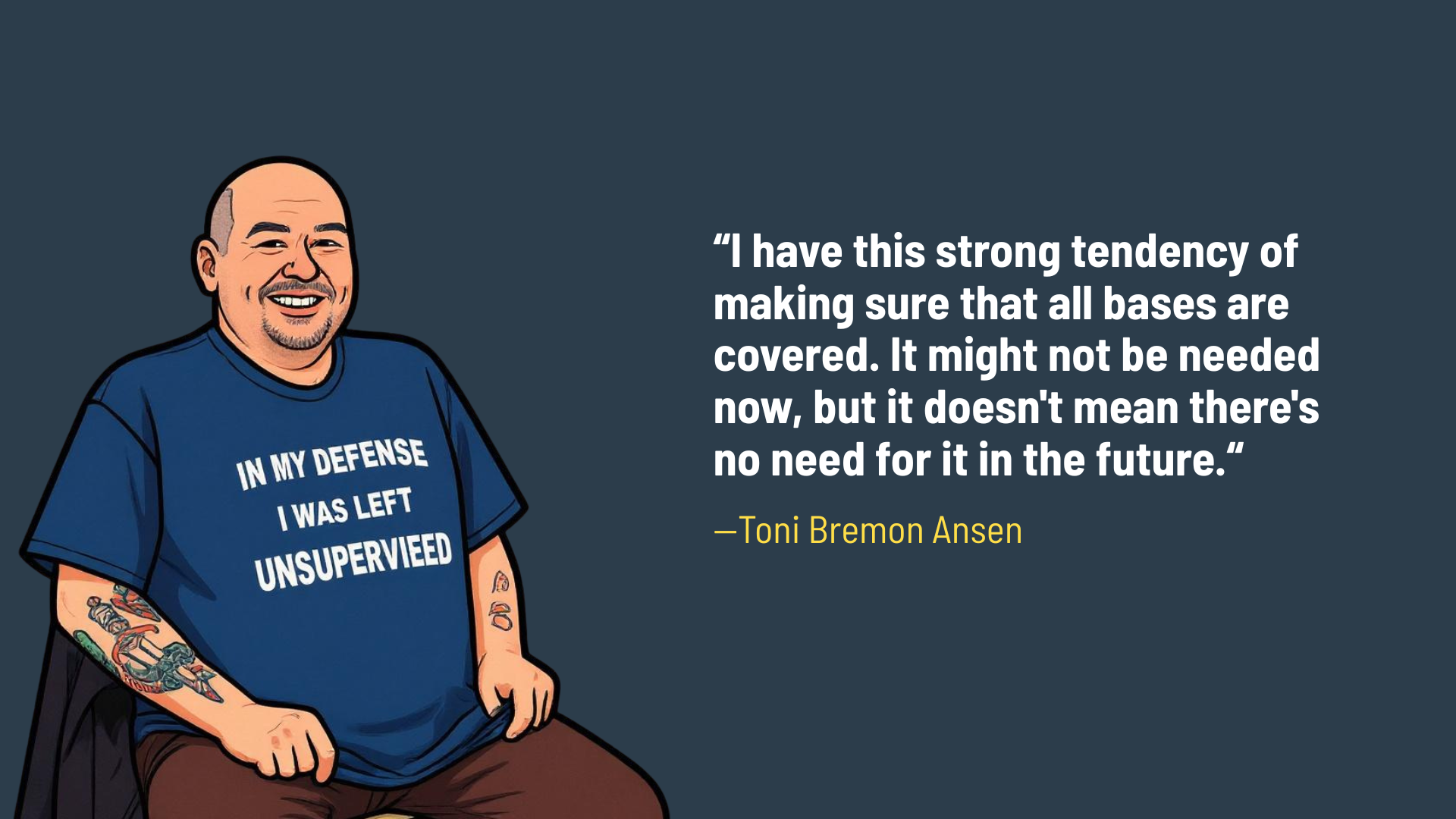
That's another call that I get a lot: people needing a ramp installed. That's another really good resource that I'm compiling. There's more social groups so people don't have to isolate. I mean, pretty much everything. I don't get a lot of calls for childcare, but it doesn't mean that it's not a service that's not needed. I have this strong tendency of making sure that all bases are covered. It might not be needed now, but it doesn't mean there's no need for it in the future.
SB: A resource guide for potential needs, just like you said you were doing when you first came to CFI.
Toni: Yeah, even back in 2021 and 2022 when I was compiling the resources, I was even doing stuff for prenatal care. Me personally, I can't get pregnant, but there are people who can, so I was like, well, I know where you could go where you could feel safe and not judged.
SB: What a form of care. Another question for you: How do you personally learn best?
Toni: I actually learn by watching. If I watch someone else do something, then I could figure it out. I had this one friend and they used to mix their own music and make a DJ compilation type of thing, and I was just watching them work on the computer. And then one day I was like, "Let me try one." He said, "Are you sure? Do you need me to show it?" And I said, "No, I think I got it." And I strung three or four songs together, and he was standing there watching the whole time. He was like, "Oh wow, you actually got it.” And I said, “Well, yeah, just seeing what you did. I just did the same thing."
"Doesn't everybody learn like that?" I said. But no, I guess not.
SB: Incredible. So outside of the “receptionist on steroids” role and outside of resource gathering, what are some of the things that you're into these days?
Toni: I do a lot of writing. I have one document that’s 700 pages of poetry and stuff that I've written since 2022. I have another document with another 40 pages of spoken word type-of-things. And I've finished four novels. The first one's being edited now. I'm about halfway finished with my fifth. And then I've already started on six, seven, and eight.
SB: Oh my gosh.
Toni: Yeah.
SB: What type of novels or what genre or?
Toni: Oh, the novels could fit in several different genres: domestic fiction, historical fiction. There's also a lot of things dealing with the working class, drug addiction, mental health issues, just a lot of real life stuff. There's also a little of the working class vs. the elite, and some of the conflicts between those communities, which is a lot of my life experience.
I actually have one character that, for some reason, I just started giving them stuff that I've actually said to people or things that are based on what I've said. And when I was trying to come up with a name — like what’s a name for a good strong female — one of the options was the name Maia, M-A-I-A, and I almost fell out. I had to choose that name because back in the late '90s, I used to do drag, and my drag name was Maia Gay Pride, spelled M-A-I-A. So I'm like, well, since this woman is exactly like me anyways, I might as well give her a name that I used to.
Every time I go back over it, every time I come across one of her lines, I know I wrote it, I know it's in there, but it's still just, oh my God, I know exactly where this line came from and the whole backstory behind it. So it just makes me smile.
SB: Wait, this is a travesty that we only have 30 minutes to talk today because now I need to know about all 8 novels. What does writing look like for you?
Toni: It's just basically me. I used to have a group that got together at the library, but since they changed their hours, the writing group got cut. Yeah, it's just me.
I kind of like to work on it by myself and then maybe have someone else edit it. And plus, since I'm so invested in the stories, I don't have to really think of why certain things happened. But for someone who doesn't know reading it, it's like, well, okay, well, why did this happen? Or why did they react this way? Sometimes I need that kind of input.
SB: Well, let us know when they hit the shelves. But let me take us back to the Peer Light page. What's a small change that made a big difference to you?
Toni: I guess one of the biggest things that helped is having a name for what's actually going on. Growing up, my mom always put me and my sister into counseling, not to figure anything out, but basically to be the obedient children that she wanted. But later on in life when I started getting all these diagnoses, I'm like, oh, well, maybe if we figured that out and then learned how to work with that, a lot of the other stuff probably would've been easier. But when you're in the moment, sometimes you have to step away from the scene to get a better look at what's going on. But I don't blame my mom, she did her best.
SB: Yeah, that language part. So real. When did that come for you, getting the name for things? And obviously, share as much or little as you’d like.
Toni: Oh, as far as the bipolar, that was in 2016. And then the ADHD, autism. Pretty much the rest of the buffet came just after COVID.
God, I wish I knew that before. Or looking back, it's like, well, I wonder why I didn't notice that before. It definitely helped a lot. Gave me a direction on how I could acquire skills to do what I need to do. Or just avoid it all at the same time.
SB: Right, that knowingness. So that's a change that made a big difference to you. What's maybe a change now that would make another difference? Or is there something that you're seeking for yourself?
Toni: Honestly, right now, the only thing that I ever look for is solitude and solace. I definitely need to get a t-shirt made saying, just leave me the hell alone.
SB: Didn’t you have one of those at the Halloween party?
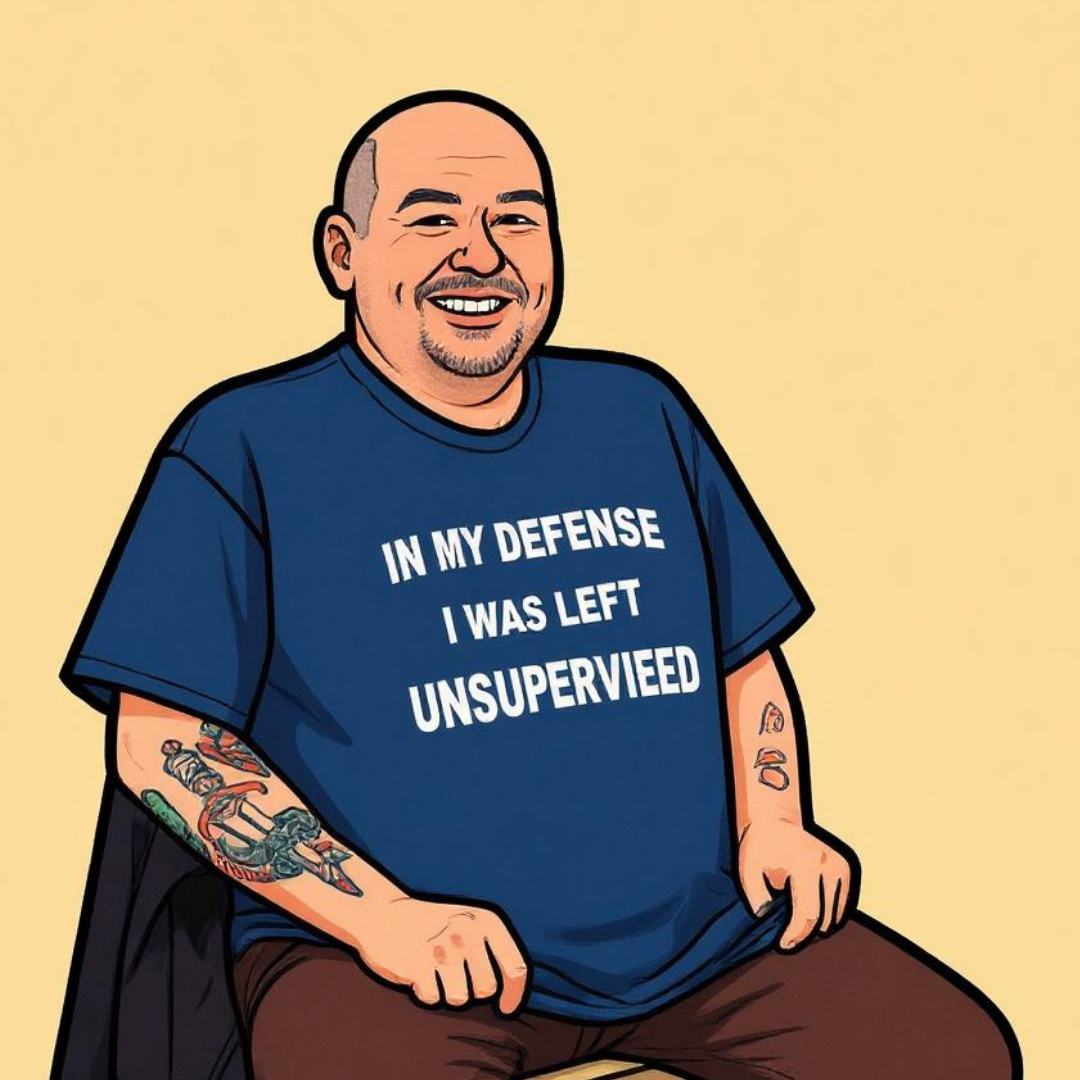
Toni: Oh, that was, “In my defense, I was left unsupervised.”
SB: That’s the one. [laughs].
Toni: I just randomly find them. I haven't gone into a retail store in, God, 15 years? Everything I own was through clothes banks or donations or hand-me-downs.
SB: What does solitude or solace look like for you or feel like?
Toni: It's right back into the isolation bubble. I'm usually the happiest when I'm alone and just my laptop and I just start typing. I never really know what's coming out until it's done.
Because I also do a lot of subconscious writing. A lot of times, I just throw something out. It's like, "Oh, wow, I haven't thought about that." And then I go back and connect the roots to why certain things are connected. And then one of the things that people always told me is how self-aware I am. And I think a lot of my writing processes help with that.
SB: Right, there's a lot of emotional grounding with that. OK, I have three questions left. What's a question you wish people would stop asking you?
Toni: “Are you okay?” That came out quick. You’ve heard of resting bitch face. I have resting Imma-fuck-you-up-face. I don't think about it, but it's just like, “I'm just sitting here.” I think that's another thing that pushes me into solitude—I have to mask to be around people—and it’s tiring as hell.
SB: On the other side of the question mark, what's a question you wish people would ask themselves?
Toni: Maybe this is just for my own writing and stuff, but I think maybe if they ask themselves if they're okay. Like, don’t project your stuff on me.
SB: Last question: How would you define independent living?
Toni: First and foremost, independent living is knowing your limits. Definitely know what you're able to do, what you're capable of doing, and what you're willing to do. I think those three things are the foundations of living independently. I know there's a lot of things that I'm capable of doing, but I'm just not willing to do it. If you know, then you can do something about it, if you want to.
I mean, there's sometimes where I don't feel like doing something, but then later down the road it's like, okay, I kind of feel like doing it now. Life just kind of ebbs and flows and it's never a constant. You're never on the same street.
SB: I lied. I have one more question. What advice would you share with someone else navigating living independently?
Toni: Don't be afraid to ask. A lot of times you have to pick up that old bravery, and sometimes you don't know that things are available until you open your mouth and something falls out.
This one time me and some friends went out to the theater and there's this row of women behind us and one of them asked, "Oh, I'm going to get a drink, does anybody want anything?" I don't know who any of these people are, but I just turned around and said, "Yeah, I’ll have a cookie." And everybody that I was like, "Oh my God, how could you say that?" And then the lady came back and brought me a cookie. And then everybody else was jealous because they didn't get a cookie. “Well, you didn't ask.”
SB: Now I want a cookie. I love this. Well, Toni, this is a short conversation, but thank you because there's a lot of gems in here, especially for just this notion of peer light and knowing your limits. I appreciate you sharing in with me today.
Toni Bremon Ansen
Toni joined CFI in June 2025. Their experiences with other non-profit organizations brought them here where they are finding their place in the bigger picture. Toni is allied with LGBTQIA2S+, BIPOC, and the unhoused communities and carries the passion of advocacy everywhere they go.