
Peer Light • Jeff Liggett
This is a part of our Peer Light conversation series, curated by Slow Blink for Center for Independence in 2026. Below, find the conversation between Bretty of Slow Blink and Jeff Liggett, Veteran Directed Care Specialist at CFI. See Jeff’s full bio at the bottom of the page.
***
Slow Blink: Tell me a little bit about what's your role there currently, what do you do? What's your day-to-day look like for CFI?
Jeff Liggett: Well, basically I was hired on here to help veterans. My actual title is a Veteran Directed Care and Independent Living Coordinator. Mainly, I'm contracted through the VA under their umbrella to provide care for veterans by ways of getting, hopefully, existing caregivers that they have, like a family member or a close friend, to provide care and get paid a certain wage, and allotted a certain amount of hours based on what their ADLs are, which is activities of daily living.
Whether it's a new participant and/or a transfer, I'll go out to them and do a soft handoff. I introduce myself and we do an intake to basically assess their situation, like their living conditions, and report back to the VA how that is, and we provide an assessment when that happens. And if the VA agree to these terms and conditions based on the program, we sign them up.
We then go back out for a second appointment to set up the paperwork for the veteran to basically be a small business. They get an EIN and they can hire their family member or close friend to be their caregiver and provide care for them.
SB: Is the VA work new to CFI or are you coming into an existing position?
Jeff: I think they've been working with the VA for quite some time. I don't know exactly offhand, but I do know that my supervisor helped to build this program from the ground up. At this point, it's grown leaps and bounds. When I was presented with the opportunity to help veterans, I said, yes, absolutely. I'm all in. I would love to do that because that's the community I'm from. I come from a military background myself, so what better way to give back?
SB: I’d love to hear whatever you’d like to share about your military background and what it means to do this work coming from the veteran community.
Jeff: Sure. Where do I start? I mean, to be honest, my dad was a Vietnam vet. I entered into the military myself. I actually was in delayed entry just before September 11th, 2001. I entered into the delayed entry program June 29th, 2001. But then I wasn't sent out or shipped out till February 11th or February 12th, 2002. And then I served in the Air Force for about 16 and a half years.
I have an aircraft maintenance background on cargo aircraft. And unfortunately, I couldn't make it to 20 years, only because I was medically retired. Along with that, I had four deployments overseas and I'm disabled myself due to the fact that I was in the military. And beyond that, I'm just trying to make sure that I am able to give back to those same veterans because I do have that same mindset that they do. And I feel that each time I do come across a veteran, they recognize that I'm there for them and that I do everything in my power to make sure that they get taken care of.
SB: That is so touching. Thank you for sharing that with me, and also, deep gratitude for your service, Jeff. Before the military, were you living out here or did you come to Washington after your service?
Jeff: I actually am originally from Portland, Oregon. I say Portland because it's easier to let people know, but for those who are actually from Pacific Northwest, I'm from Beaverton. Not too far from Portland, about 15, 20 minutes just in the suburbs, but that's where I grew up. I left there in 2002, and before I had actually gone into the military, I met my wife. Her and I were dating at the time, and she decided to come with me when I was going through my basic training in tech school. We've been married ever since. We've had two beautiful kids. So her and I have been on this amazing ride, this journey through this thing called life, coming up on 24 years.
We have moved to many places. We used to live in Europe, then back in the South, then on the East Coast, and then we came back to Washington, the Pacific Northwest region due to being closer to family and being closer to the needs with the military and my medical needs.
SB: You mentioned medical retirement. For those who may be unfamiliar with that, would you mind sharing more about this?
Jeff: So 20 years is basically when you're eligible to receive retirement benefits, especially in the military. At 20 years, you have the option to push that magical red button and say that you no longer want to continue being in the military. Unfortunately, as a medical retiree, I didn't exactly have that option due to my disabilities. I do have combat PTSD and a smattering of other medical issues, but that doesn't deter me from what my purpose is, and that's making sure I take care of my veteran community. So medical retirement's just basically that I wasn't able to perform my duties due to my conditions. In this case, I actually had to make the choice to go onto a medical board. And then from there, that medical board deemed that I was not able to be in based on the best interest of the Air Force.
SB: Thank you, again, for sharing in, Jeff. When I hear you speak, I can feel that “purpose.” that “energy,” and that “fire” to support your veteran community. In your previous or current lines of work, was there any advice you were given that you still think about, or advice that you gives to other retired veterans to help them cope with changes and adjustments?
Jeff: You have all these great questions. Really, I say this to people that want to enter the military, and I even tell this to my daughter, as I want to try to be her guide: go to school first and then go in as an officer, rather than go enlisted like I did. I still have friends and comrades that I served with that are still in the military, and some of them have recently retired after I was medically retired, and they're the ones that I used to train with. Even people that as far back as Vietnam vets.
I tell them: No matter what you decide to do in life, do it with purpose. Do it with the intention to leave things better than the way they found it. Just last night, I came from this one organization, The Permission to Start Dreaming Foundation. I was part of what they call a “warrior path program,” where they take about a handful of veterans with a like-minded mindset, who were able to embrace their warrior ethos. And if it wasn't for that, I probably wouldn't be in the mindset to be able to give back to others. I'm very thankful for them. But during those heroes huddles that we have, the last Wednesdays of each month, we get together and we just have the camaraderie, we have the mindset, and we talk about anything that's on our minds, anything that's going on in our lives.
We try to help each other out because that's what we do. That's what veterans and our community do. No matter when they served, that's how we have each other's back. That's why we tell each other, “We got their six.” That way, nobody's left behind. I actually just came from a dinner last night with them, and I had one veteran that served in Afghanistan, and he was very angry about his time. I could relate to the anger, I could relate to the rage, I could relate to the discontent of how he felt about his time. But a lot of us were trying to help him reflect on what the positive things were. So we were trying to help shift the mindset.
At the end of our dinner, I went over to him and I said, "Hey, you know what? I understand the anger. I understand the rage. I understand the thoughts, the behaviors, the actions you want to take. Have the open mind to change that mindset. Have the open mind to go to this program that they're offering here at the foundation and just lean into it." And I said, "It's transformative." I said, "The people here, they're amazing." I was standing there shaking just because of how much it helped me. And I just wanted to bestow that knowledge upon him, and hopefully he's able to take that information and grow with it as well and remember the good things. The bad things are there. Those things happened. However, moving forward, it's what you do next that's important.
SB: I'm getting chills myself, just listening. The connective power of care. It seems like that's what showing up means. Saying, "I've been there," or, "I might not know what you went through, but I know what you’re going through now.” To validate that it's real, that we exist, that we're here. I’m curious: what did early care look like for you? For folks who come to CFI — participants who are newer — what are some of those early steps that help people really feel grounded? And how do we continue that care going forward?
Jeff: I go in with the mindset that I'm no better than anybody else. I meet them where they're at. Whether I come across a veteran, part of the VDC program, whether they have dementia or whether they've had agent orange exposure, I meet them where they're at and I meet them where their families are at. Anybody else I advocate for, I just get to the point where we're at a meeting place where there's no pressure on them, no pressure on us.
Just like our motto says: Nothing about us without us. We more or less try to do what we can to make sure that we are doing our best and giving our best versions of ourselves to these participants to make sure that they get the care that they need and get them the resources and the referrals that they need so that way they can have a better quality of life.
Early on for myself, I was looking at advocating. Advocation is huge. For somebody to be able to speak on my behalf when I wasn't able to, because I just wasn't in the mindset, that's huge, whether I knew it or not. And now that I'm able to take those reins back and fulfill my purpose and be able to advocate for others, it just fills my cup. And so that puts me at peace, and that's why I continue to give back each and every day, and I love what I do.
SB: So poignant. The connection between finding that a language for your experiences and developing the agency to know your story, what you need, and how you can help. So with the veterans that you work with — I am sure it's a broad spectrum of abilities and disabilities — could you give a sense of what's the range or the different types of care that you provide?
Jeff: We serve veterans as early as Vietnam and as current as what we have right now. I think the youngest I have on my caseload served around the same time I did. So the Operation Enduring Freedom, Iraqi Freedom. He is about five years younger than I am. But going from that range, you have the older veterans that are, like I said, going through dementia and going through congestive heart failures, going through strokes, things of that sort as they get older. And then as far as the younger folk, it's just more or less the other conditions where they had lost their purpose. And so they had gained a lot of weight, they're diabetic, they're not able to move around as they would've liked. They're at a point where their caregiver is providing a lot of assistance for them.
There's a very, very wide range of things. And what I try to do is, I guess, is provide the wage and hours for the caregiver to give them the hours that they need. Not all of them get full-time hours, which is a 40-hour work week. Some of them get 30. Regardless of how many hours they receive, we want to ensure that they're getting the hours that they deserve, that they've earned. What we do is make sure that we do monthly checks via phone calls. Every three months, we call or we actually go in person and we make sure that everything's going all right in their living space, make sure that they're in a good head space to ensure that they're getting the best care that they need.
SB: Thanks for that insight and overview. Here’s a more personal question: What are some things that light you up? What brings you joy during difficulty, be it personal hobby or family-type stuff?
Jeff: Gosh, you're great at these questions.
SB: I have a good therapist.
Jeff: I bet, I might have to get a referral for that one. [laughs].
SB: We're all here sharing networks.
Jeff: Exactly. What brings me joy? I mean, before the military, I used to be into sports. I used to love playing basketball. That's what I used to love doing. I was actually going to play semi-pro overseas, but that just didn't work out. So the other options were the military or just find work. Sports has always been my go-to. I'm not able to do it as much now due to my physical condition and my mental condition;. however, that doesn't stop me from doing the work that I love to do.
What lights me up is just spending time with my family. We like going to comic conventions. We like going and collecting things that bring us joy. I would love to bring everybody to my little corner office of my home. I have a collection of Funkos. I have a collection of Marvel collectibles, Star Wars collectibles. I'm kind of a geek like that, and that's what brings me joy.
SB: Favorite Marvel series?
Jeff: Series or character?
SB: Either one.
Jeff: My favorite one is Captain America, just because of just what he embodies, just based on his morals, his beliefs, and his values on just doing the right thing. That's who I connect with most. And then he does things with honor. I mean, granted, being in that mindset also, since he comes from someone that didn't have many abilities and he was looked over and then finally gets the opportunity to serve. In that realm, he’s kind of looked at as a war monger. He likes to look for war and that type of work. But at the same time, it really just boils down to his integrity, his respect, and his honor. So that's really what I connect with him. And Chris Evans, who played him in the series, was great at embodying that. I have two cap shields actually in my office. I have the 75th anniversary and the subdued winter soldier shields in my office.
SB: I'm a recent fanatic, so I won't claim legacy or experience. But I know the feeling of seeing a story, and thinking, “Man, I needed this story in my life.” It’s why I consider myself a student of story. I just feel like story has that transformative power that you're speaking to. It’s real.
Jeff: Yeah. I'll let you in a little secret though. I'm actually a DC fan versus a Marvel, but I just connect to Marvel more. A DC fan only because of Superman. And it's not because Superman's the most overpowered being or superhero. It's more or less because he's the most human of us all. He's the most caring, and he tries to look out for everybody's best interests. And he just tries to embody the best version of everyone else. So he just tries to be that best version. So really that's what it boils down to.
SB: We should clearly talk more about all of this. But, I wanted to ask a few other questions about your work and perspective of work at CFI. The first one is: How do you learn best?
Jeff: I'm a very hands-on type of person. I can see things visually. However, if I am trying to mimic or I'm trying to recreate a certain task, it's better that I do things hands-on. I learned that really quickly when I was in the military, being that I have an aircraft maintenance background, you have to be able to show that you can perform a task several times before they will sign you off on it. So that's how I learned.
I was a crew chief on aircraft. Fixing the brakes, tires, struts, components, panels, wingnuts, spars, things in the empanage, fuselage, elevators, flaps, elevators, ailerons, pulley systems, steering columns, gauges, chaff and flare. You name it. Pretty much anything that's on there.
SB: So you're Superman?
Jeff: [laughs] Not exactly, but I feel like I have some of the same mental aspects that he has as trying to do things for the greater good.
SB: Here’s a question about questions. What’s a question you wish people would stop asking you?
Jeff: “What am I?” I'm multiracial, my background is Filipino and white. So when people come across me and they see me, I get mistaken for a lot of other ethnicities. At the end of the day, I just want to be known as Jeff. I just want to be known as someone that cares, someone that actually tries to do his best to take care of those around him, especially the ones he loves.
SB: On the flipside, what's a question you wish other people would ask themselves more often?
Jeff: Do a check-in and see how you’re feeling from day to day. Something I learned from the military is what they call KISS: keep it simple stupid. I've bestowed that to some of the staff here. It's at the core of making life simpler and not making it as complex as it needs to be. Keeping things on a neutral level or a ground level, you'll be able to see things in the horizon and you'll be able to make better decisions moving forward.
SB: My partner says that to me more than I’d like to admit. Another question for you: How would you define independent living?
Jeff: Gosh, I actually think about that from day to day, and it evolves over the course of each day. And what I understand from independent living is being able to advocate for oneself, being able to garner the love and respect from others, and for them to know that you're able to do things on your own without assistance. And if you do need some assistance, it's being able to voice that to others despite your limitations. At the core of it, it's being able to still have your wits about you. You're still able to have the support you need, and you're still able to have the advocacy avenues that you have in order to live the life that you need. Not necessarily what you want, but the one that you need that's going to be most beneficial for you and those that seek that independent living mantra, that philosophy that they have.
SB: Love it. Final question. What is something that you're looking forward to?
Jeff: My wife and I and my daughter are going on a cruise in July to the Mediterranean. I haven't been on a cruise since 2011, so it's been a little bit. But other than looking forward to that trip, to be honest, I look forward to each and every day waking up to a new day and beginning anew and trying to be a better version of myself than I was yesterday.
SB: Jeff, that's a beautiful place to end. Thank you so ,much because I feel like there's so much in your words to live by. So thank you for taking the time.
Jeff: Anytime. You're welcome.
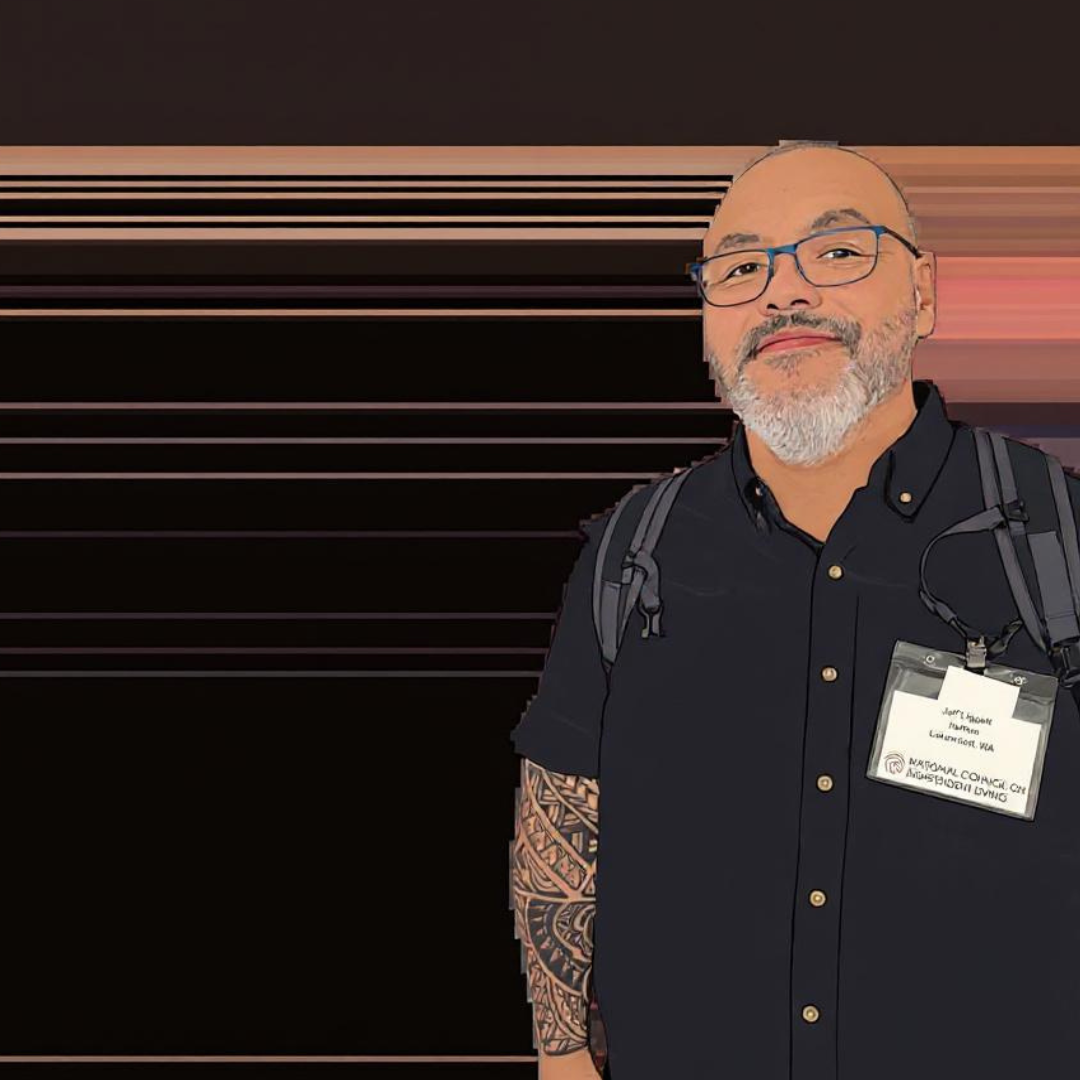
Jeff Liggett
Jeff is a Veteran Directed Care Specialist with an extensive Air Force military background of over 16 years. He is originally from the Pacific Northwest and grew up in Portland, Oregon. His compassion and advocacy for veterans is why he tirelessly gives back to his community.
He currently holds an Associate’s Degree in Health Information Technology and a Bachelor’s Degree in Health Information Management. Additionally, he is an Honors Society alumni through Phi Theta Kappa. Lastly, he lives in the South Sound with his loving wife and his 2 older children.